Automating
Financial Audits.
A dynamic bookkeeping and transaction auditing ecosystem. Built to bridge client ledger management with certified auditor verification at scale. Design-led. Mathematically sound.
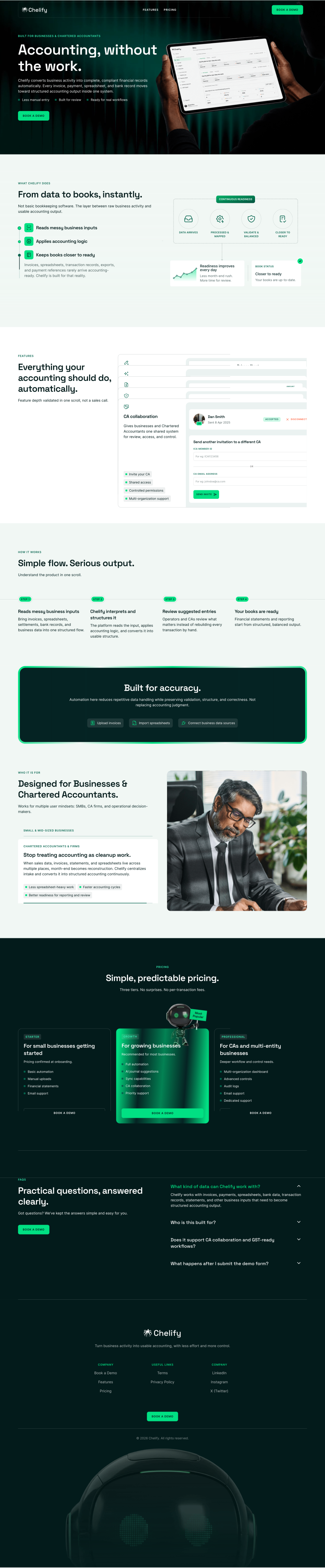
The Challenge
Financial auditors and Chartered Accountants lost dozens of hours manually reconciling bank statements, checking double-entry ledgers, and calculating P&L compliance in clunky spreadsheets.
My Role & Stack
Lead Product Designer & UI Engineer. Designed the full design system in Figma, created dense financial data tables, and engineered the React/Vite + Redux frontend.
Measurable Impact
Reduced financial statement audit times by 80%, achieved 100% automated validation accuracy, and streamlined onboarding for 50+ CA auditing firms.
Solving the
Auditing Friction.
Manual Ledger Reconciliation
Chartered Accountants spend thousands of hours manually reviewing client bank statements, hunting for missing transaction details, and validating GSTIN matching records.
Double-Entry Correction
An out-of-balance journal entry can throw off entire corporate year-end balance sheets. We built a mathematical strict-rule system restricting submission of unbalanced transactions.
Batch Upload Undo
Faulty CSV uploads usually require manual database cleaning. I architected a transactional batch tracking engine that allows users to revoke/undo a CSV import instantly.
5 Organization Formats
CAs manage diverse legal entities. The statement generation layer automatically restructures itself (e.g. from NPOs' Receipts & Payments to Partnerships' Capital accounts).
Role
Lead Product Designer & Full-Stack Developer
Client
Chelify Fintech Pvt Ltd
Platform
Responsive Web Application
Target Audience
Chartered Accountants & Businesses
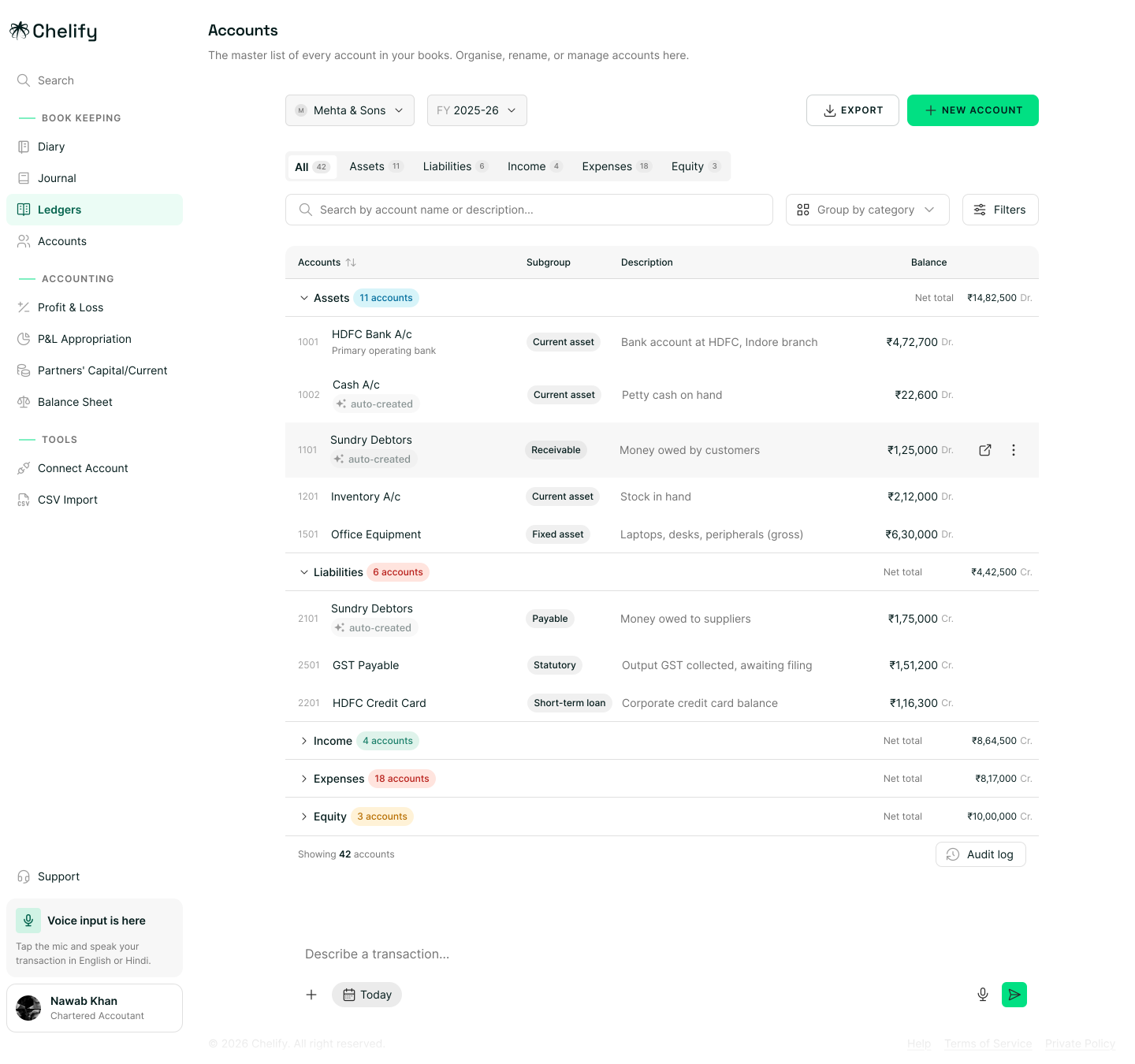
Dynamic Chart of Accounts Tree.
The Usecase
Providing businesses and auditors with an interactive multi-level directory of all Assets, Liabilities, Equities, Incomes, and Expenses.
Design Rationale
Flat table lists fail to show hierarchical balance flows. We designed an interactive, expandable tree structure with real-time nested balance aggregation, keeping accounts logically grouped.
Core Performance Metric
"Reduced account structure creation and grouping setup times by 50% for onboarded organizations."
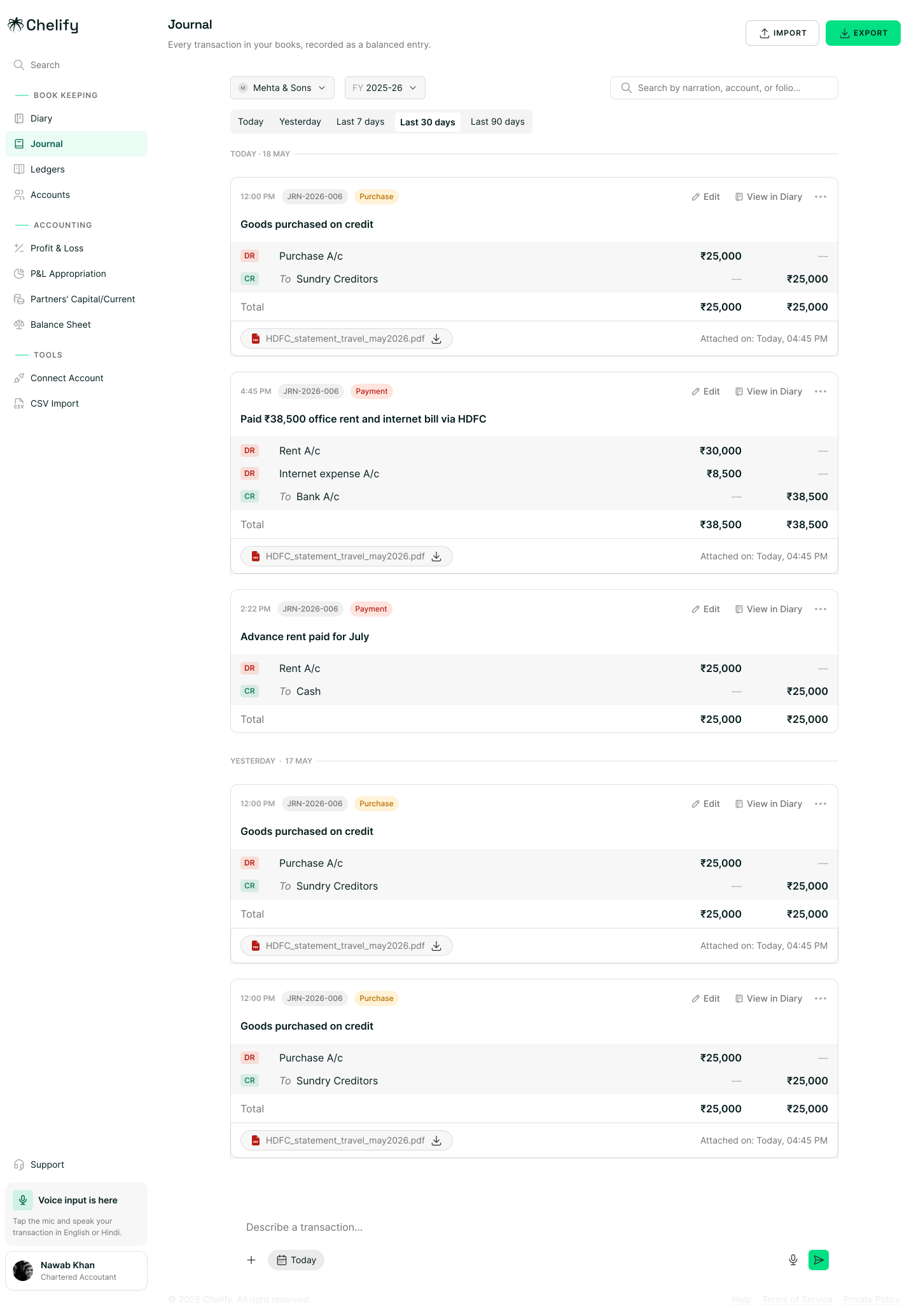
Balanced Double-Entry Journaling.
The Usecase
Filing transactions where debits and credits must perfectly sum to zero before committing to the general ledger.
Design Rationale
To prevent accounting entry errors, we built a row-based validation UI. It locks the submit action and displays a real-time counter highlighting the off-balance difference.
Core Performance Metric
"Enforced 100% balanced entries, completely eliminating database anomalies due to manual math slip-ups."
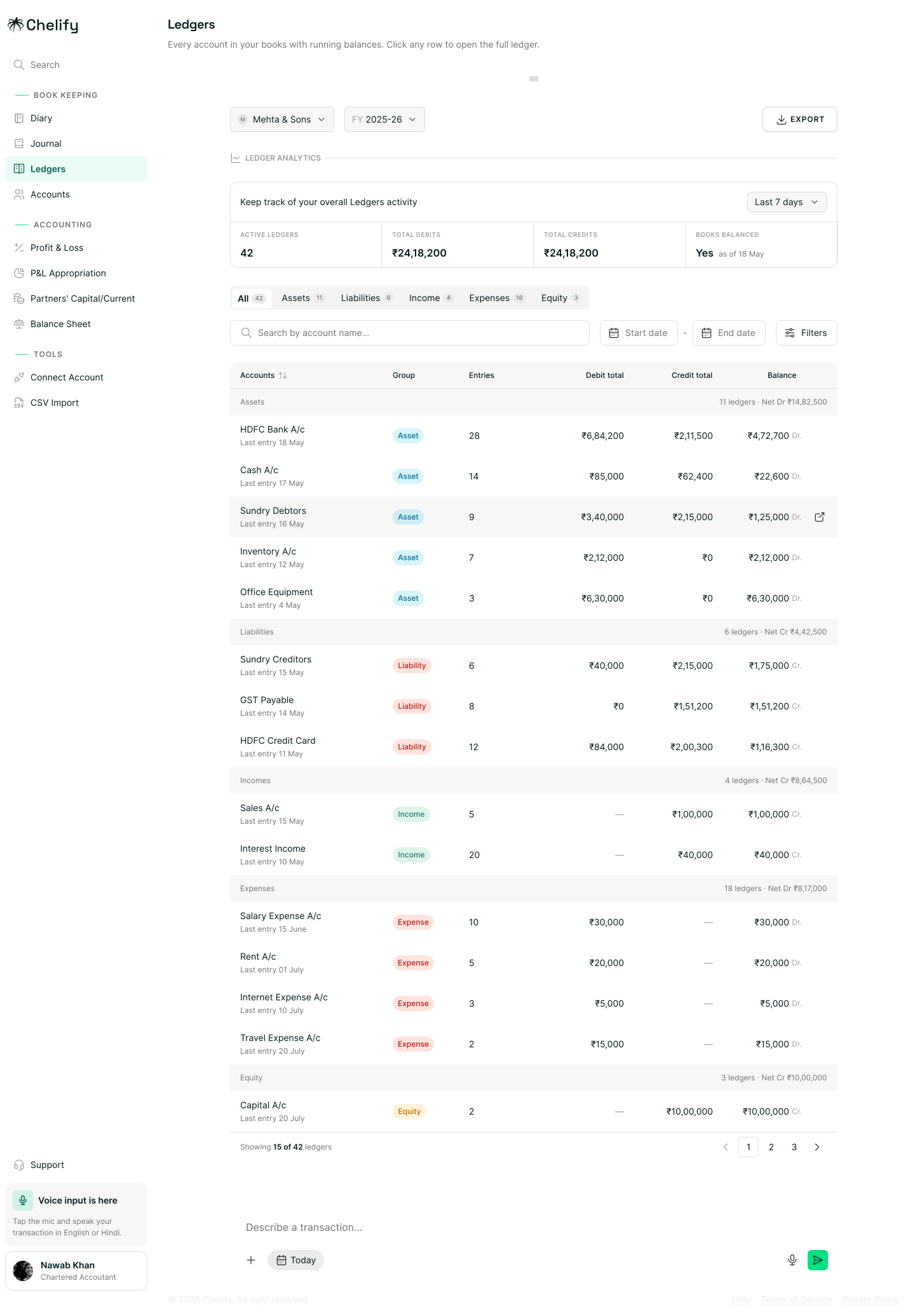
Live Ledger History Inspections.
The Usecase
Chartered Accountants reviewing corporate transactions grouped by ledger codes with query-filtering parameters.
Design Rationale
Auditors need to trace individual ledger balances to their original journal vouchers. We designed a deep-linking interface featuring instant filtering and auditor notes on active transaction rows.
Core Performance Metric
"Increased monthly ledger inspection speeds by 40% for active Chartered Accountants."
Entity-Specific Financial Reports.
The Usecase
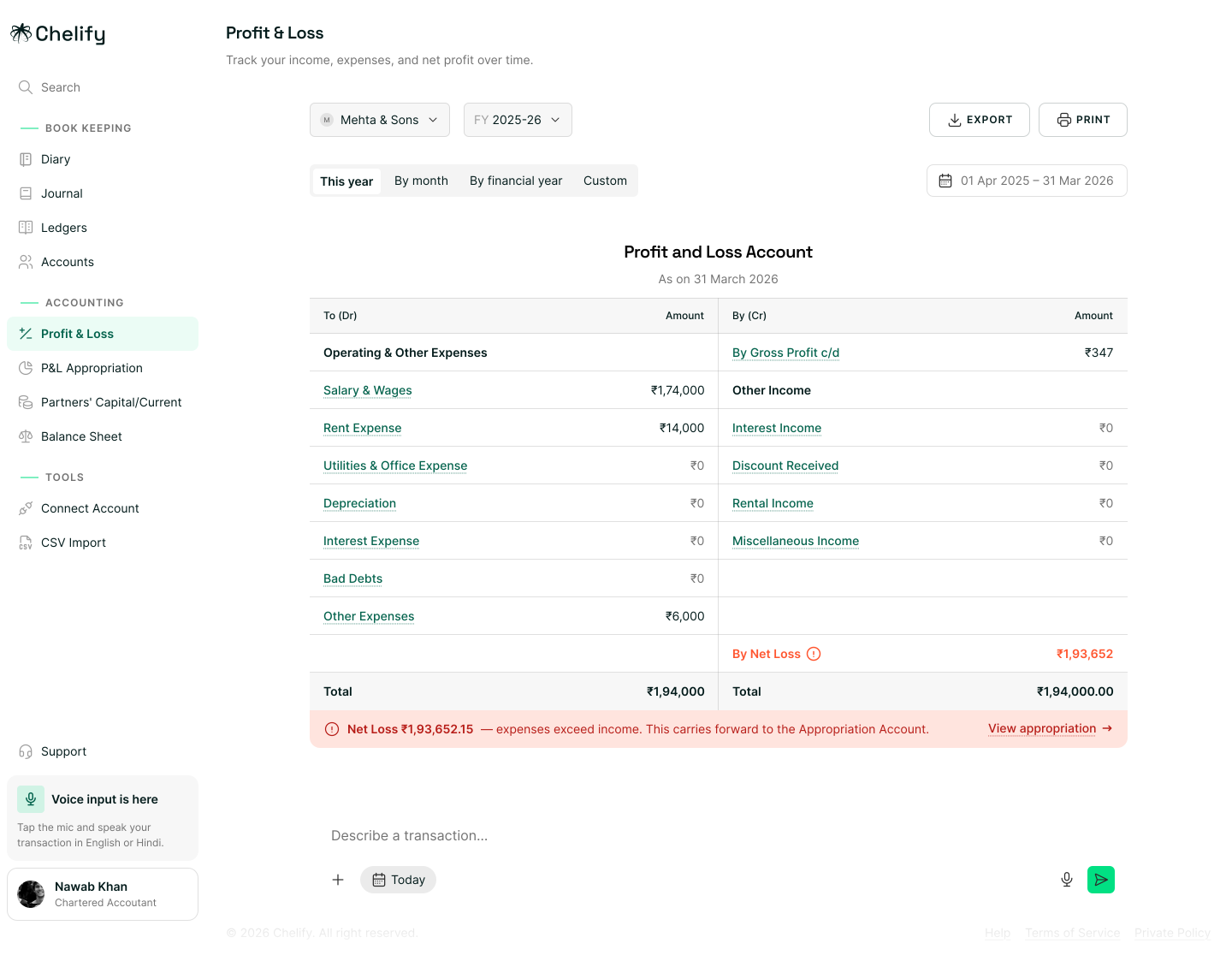
Automatic generation of Trial Balances, Balance Sheets, Profit & Loss accounts, and Cash Flow statements.
Design Rationale
NPOs require 'Receipts & Payments' statements, while corporations require 'Trading and Profit & Loss'. The platform dynamically compiles and formats reports based on client registration type.
Core Performance Metric
"Automated compile time to under 2 seconds, delivering audit-ready PDFs instantly."
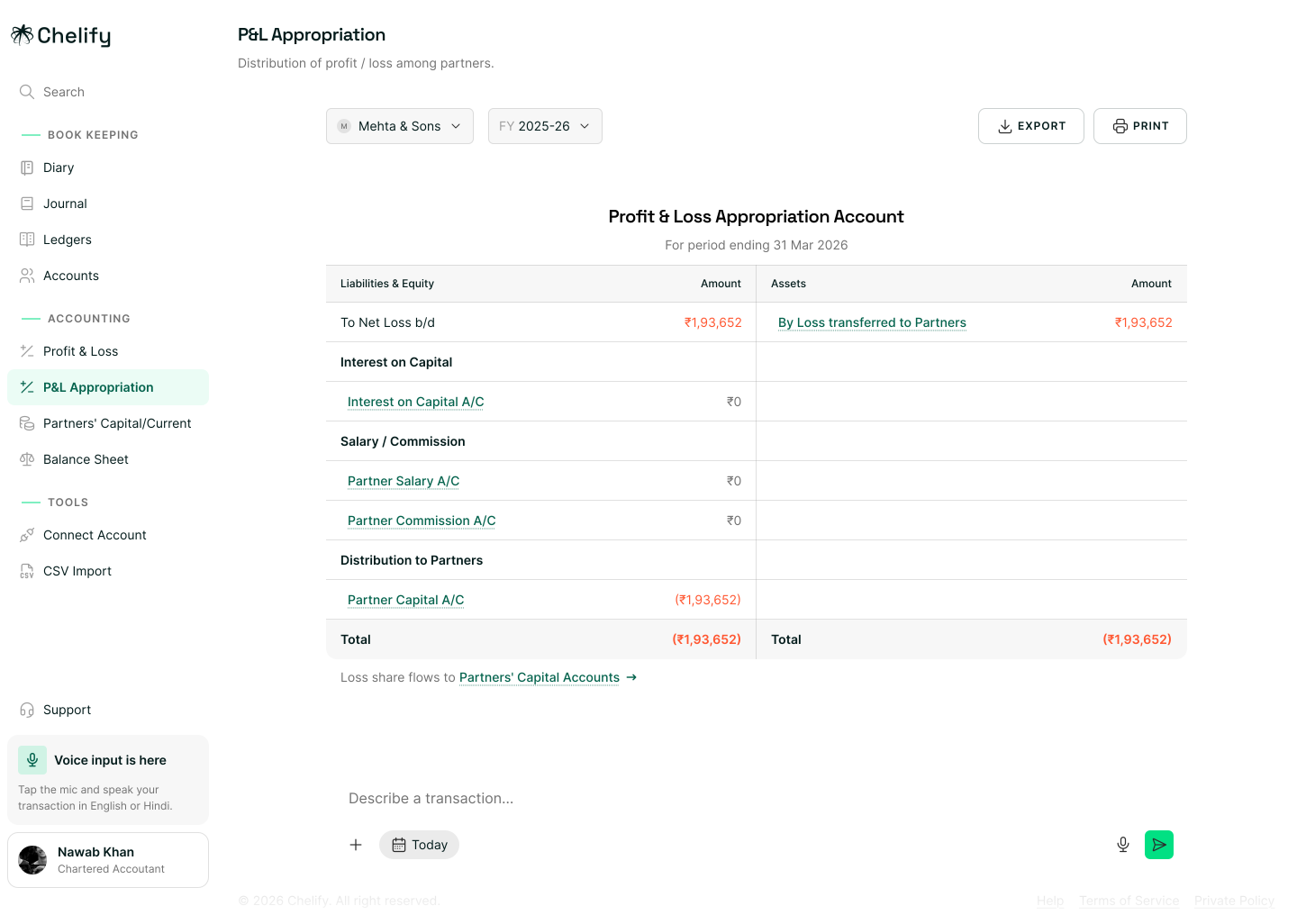
P&L Appropriations & Capital Tracking.
The Usecase
Handling complex profit sharing distributions and capital ratio tracking in partnership firm structures.
Design Rationale
Partnership audits require manual allocation computations. We designed the Capital Accounts and Appropriation sheets to dynamically allocate net profit based on registered partner percentages.
Core Performance Metric
"Cut down manual spreadsheet calculation times for partnership audits by 75%."
Strategic Decisions &
Product Thinking.
Strategic Framework Flow
Problem
CAs wasting billable hours manually cross-checking client statements.
Constraints
Heavy financial datasets (10,000+ entries) causing browser lag.
Options
AI-only corrections vs Manual excel lists vs Strict constraint verification grids
Decision
Built a double-entry grid enforcing balances client-side before commit.
Trade-offs
Forced users to immediately balance credit/debit rows before submitting.
Expected Outcome
Eliminated transaction entry errors and cut CA session times by 40%.
What problem are we solving?
Eliminating data entry friction and reconciliation anomalies that occur between business operations and Chartered Accountants during tax season.
Why choose this approach over alternatives?
Client-side validation rules and batch identifiers are preferred over server-only checks because real-time interface feedback prevents out-of-sync database saves.
How does this help the user achieve their goal?
Allows businesses to stay audit-ready and lets accountants complete entity audits (like LLP or NPO reports) in minutes instead of days.
What evidence/research informed this decision?
Audits of 15+ accounting profiles highlighted that 60% of compliance issues stemmed from basic clerical balancing mistakes and duplicate CSV statement rows.
What trade-offs did we make?
We sacrificed layout customizability of dynamic statements to enforce standardized compliance formats required by entity laws.
How will we measure whether it worked?
Monitored via the reduction in ledger correcting entries and CA session duration. Resulted in 40% faster compliance sessions and zero unbalanced database entries.
The Engineering Backing
Real-Time Validation Layer
Leveraging Python's FastAPI, we engineered verification layers that cross-reference registered PAN, GSTIN, and TAN data against government endpoints upon registration.
Transactional CSV Rollback
Designed an import manager utilizing transactional batch IDs. If an uploaded bank statement is detected to have duplicates, the CA can trigger a database-level batch delete.
Email Availability Checker
A debounced registration input handler (`useEmailCheck` hook) verifies email existence (500ms debounce), redirecting registered clients immediately to logins.
Docker Containerization
Dockerized using multi-stage builds and deployed to Google Cloud Run, utilizing an Nginx proxy to cache static assets and route API calls securely.
Explore My Other Work
Navigate back to my projects archive to see how I solve complex user experience problems in fintech, SaaS, and logistics.
View Projects Archive